car industry

Gurgaon Workers News No.13 - October 2008

Wildcat strikes and repression in the Special Economic Zone of Gurgaon.

Gurgaon Workers News - Newsletter 13 (October 2008)

Wave of strikes and agreements in Brazilian car industry

Workers at major car industry plants in Brazil went on strike during September in support of their demands for improved pay.

On September 1, workers at the Volkswagen-Audi factory in the city of Curitiba began a one-week strike. Workers at the Volvo and Renault/Nissan plants in the same town also went on strike on the same day.

During that week, 24-hour strikes occurred at Ford, General Motors, Toyota, Mercedes Benz and Scania in cities in the interior of Sao Paulo state.

Arrests of Korean trade unionists continue

Following a wave of strikes, the South Korean government has unleashed a massive attack against the Korean Metal Workers' Union targeting more than 75 of the union's key leaders for arrest or investigation.

With the recent arrest of Hyundai Motor Branch First Vice-President Kim Tae-gon on September 16 and the arraignment of Jung Gab-deuk, president of the Korean Metal Workers' Union (KMWU), on September 18 on charges of obstructing business, members of the KMWU are bracing for more assaults. Leaders of the Korean Confederation of Trade Unions have also been targets of arrest.

Workers' struggles and the development of Ford in Britain

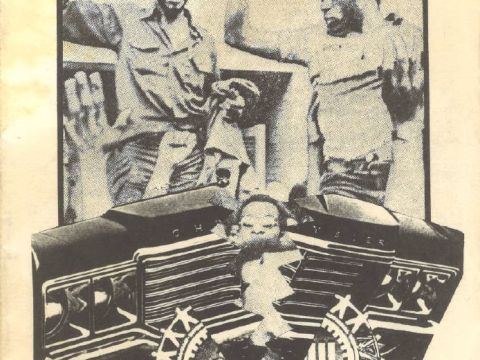
Cover of Workers' Struggles and the Development of Ford in Britain.

This essay by Ferruccio Gambino first appeared in the book Operai e Stato (Feltrinelli, 1972). It was translated into English and published by Red Notes in 1976 as their first pamphlet. The PDF file is in 2 parts, both about 4MB.

Brazil: Autoworkers vote to continue strike

9,000 workers striking at car plants in the south of the country have voted to extend their strike.

Workers began their strike on Tuesday in support of demands for wage increases to deal with rising inflation. Three Volkswagen, Nissan, and Renault owned plants in the southern state of Parana have been affected, causing a production loss of about 6,600 vehicles.

1987: The Great Workers' Struggle

A short account of the South Korean strike wave of 1987 known as the Great Workers' Struggle. Affecting most major industries and involving over a million workers, the strikes and militant tactics used won significant gains in pay and conditions for many.

The workplace struggles that took place in 1987 occurred within the wider background of political reform. For thirty years South Korea had been ruled by a military dictatorship, and growing calls for democracy had echoed across the peninsula through the 1970s and early 80s.

Wildcat strikes hit Plymouth and Falkirk

Workers at a new nuclear power station in Plymouth and coach builders Alexander Dennis in Falkirk were both on wildcat strike this week.

Sixteen staff were laid off from the Langage power station construction site near Plymouth, and picketed the site on Thursday morning, bringing 350 workers out in support by shift start.

Roundup of a month of strikes in Iran

A round-up of recent strike activity in Iran, including the car industry and agriculture.

After three weeks of not receiving wages workers at the Alborz Elastics Factory began a strike on July 12. Management had reneged on a promise to pay a New Year's bonus to 400 workers, and has refused to pay into a loan fund for workers despite taking regular deductions from salaries.

Iranian autoworkers strike against precarious work

Thousands of workers at the Iran Khodro car manufacturing plant are protesting the exploitation of precarious workers and demanding better wages and conditions.

What began as a hunger strike launched on June 28 has grown to a full-scale strike as thousands of workers at Iran Khodro, the country's largest auto manufacturer, walked off the job to win wage and conditions improvements.

Workers' demands include:
1) Prohibited entry of security guards to workstations;
2) An end to mandatory over-time;
3) Increases in productivity benefits;

The Ecological Challenge: Three Revolutions are Necessary

With a planetary ecological crisis on hand, it can no longer be denied that socialism will be incompatible with mass production and mass consumption. Indeed, even without returning to Malthusian catastrophe theories, we are forced to admit that the planet’s resources are not inexhaustible. These resources could provide for humanity’s needs, but only if they are used in a reasonable and rational way, i.e., in a manner directly opposed to capitalist logic, which in itself is a source of imbalance.

The Ecological Challenge: Three Revolutions are Necessary
by Alternative Libertaire

Syndicate content